Haydn and Beethoven with the American Classical Orchestra
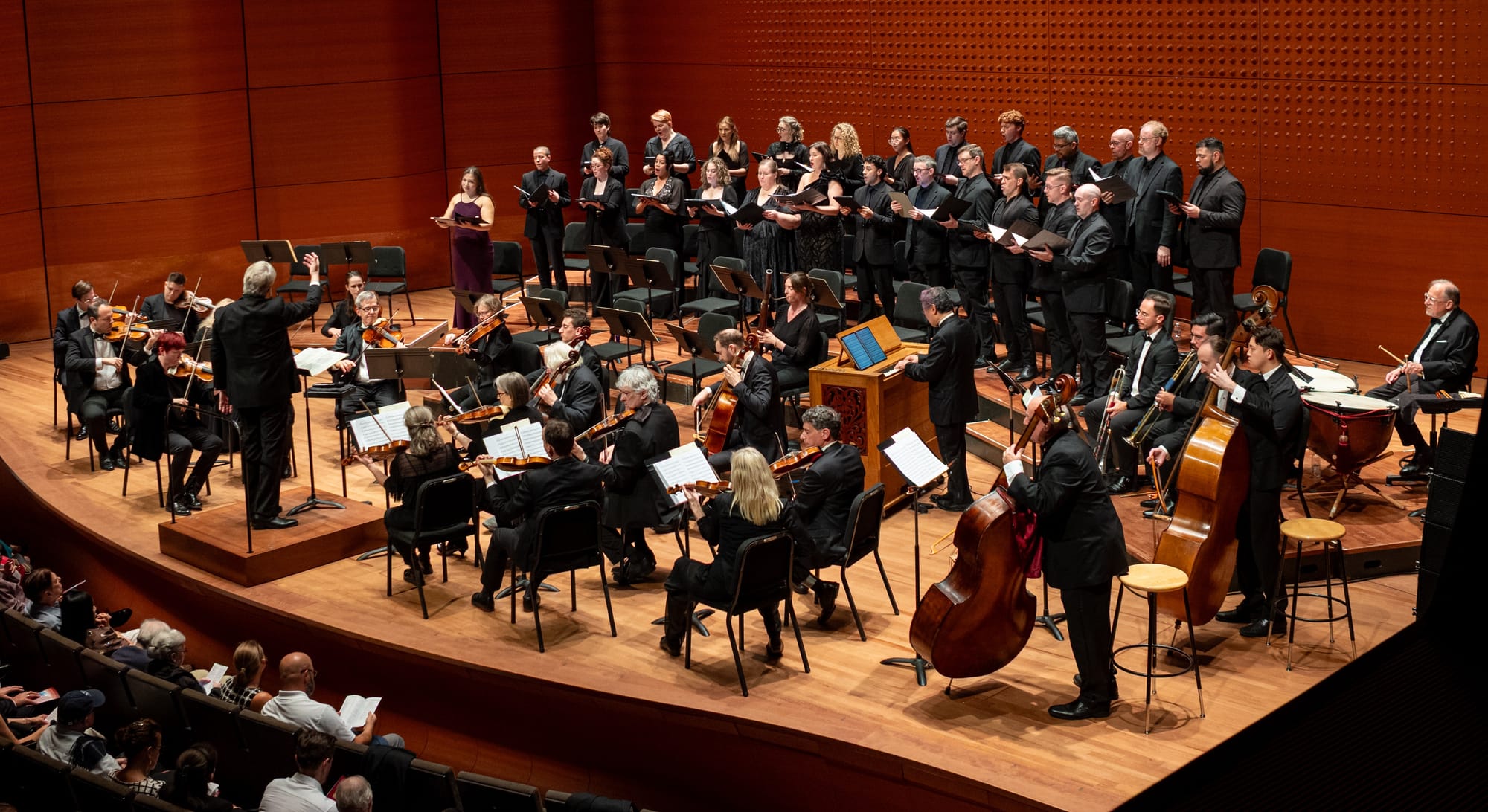
Performance photo by Matt Dine
~ Author: Kevin DallaSanta
Thursday September 17th, 2026 - The American Classical Orchestra opened their season at Alice Tully Hall with Haydn’s Nelson Mass and Beethoven’s First Symphony, to a warm reception from an enthusiastic audience.
The ever-prolific Haydn wrote a total of fourteen masses. The Missa in angustiis (Mass in Anguished Times) would later be nicknamed after Lord Nelson, whose military victory closely coincided with the work’s premiere. The work is nominally in D-minor, but after the initial, austere Kyrie, it spends much of its time in D-major.
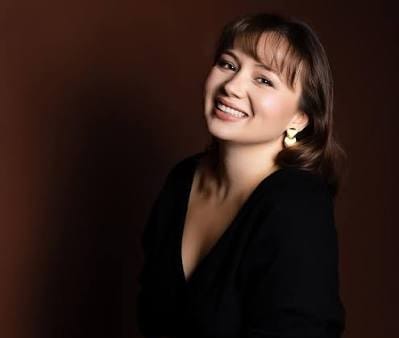
The mass places great technical demands on the choir and soloists, particularly the virtuosic passagework for soprano, superbly executed by Shelén Hughes Camacho (photo above). Conductor Thomas Crawford kept the instrumentalists and vocalists in close coordination yet allowed their energy to take the lead. Too easily can works from Haydn’s era deflate under a rigid baton; Crawford’s apparent trust and rapport with the musicians circumvented such a pitfall.
In the work, Haydn explores a wide variety of moods, from the despondence of crucifixion to the transcendent Sanctus. The two Amens—in the Gloria and the Credo—achieve ecstatic highs through masterful contrapuntal writing. In many ways, the Nelson invites comparison to Beethoven’s Missa Solemnis, in D-major, written a quarter century later.
Among the joys of the evening was the impeccable balance of the ACO in the lucid acoustic of Alice Tully. The wood-paneled hall, with its shallow stage, has a very live sonic profile, tempting many performers to overplay. That was not the case with the ACO: with a relatively small choir, period instruments, and prudent restraint, the loudest climaxes just reached the level of forte the hall could contain.
In the second half, the orchestra continued their multi-year survey of the Beethoven symphony cycle, which began last season with the Third. The First, in some ways, is difficult to approach. With no predecessor for reference, Beethoven’s symphonic beginning is frequently handled as a joke of sorts, with musicologist Donald Tovey even referring to it as a “comedy.” Crawford concurred with this thesis in his introduction to the audience, and began the fourth movement with a comic extension of the opening scale.
Yet one can also interpret the work as a serious foray by a 30-year-old into a format dominated already by giants such as Haydn and Mozart. The putatively jovial elements show the composer already interested in stretching the limits of the symphony, as he would do throughout his career. And it seems unlikely that Beethoven intended to bring much of a joke to his Viennese debut. Of course, the music is still fun, and funny—as evidenced by the delight of the performers and the raucous applause of the listeners.
The performance was anchored by strong trumpet and timpani playing. Both Haydn and Beethoven place the timpanist in a critical role for dynamics and cadences, particularly important for period instruments whose relatively muted tones project less across the ensemble. The trumpet section plays an active role in the Nelson Mass, which was originally scored with no other winds, and in the Beethoven. Precision and a delicate balance with the acoustics of the orchestra are paramount, and under Crawford’s direction the trumpets achieved this.
Many symphonies, Beethoven’s first included, open with a slow and introduction, often lengthy. So too the evening’s performance opened with an introduction from the conductor previewing the main musical themes from both Haydn and Beethoven. Yet both composers still had plenty of surprises in store. Haydn will return at the next ACO concert; and two more Beethoven symphonies will be performed this season.
~ Kevin DallaSanta